
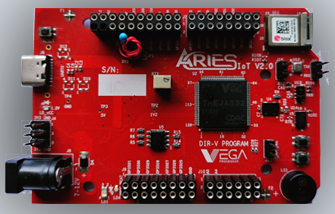
This tutorial demonstrates the use of the onboard buzzer available on the ARIES IoT v2.0 Board. The buzzer is an integrated audio output device that can generate audible tones, alerts, and notifications without the need for any external hardware connections.
Aries IoT v2.0 Board
The ARIES IoT is a fully indigenous and a “Made in India” product to get started with basic microprocessor programming and embedded systems. This board is built upon a RISC-V ISA compliant VEGA Processor with easy-to-use hardware and software. For more details about ARIES IoT boards please refer to the ARIES development boards and Ecosystem.
Buzzer
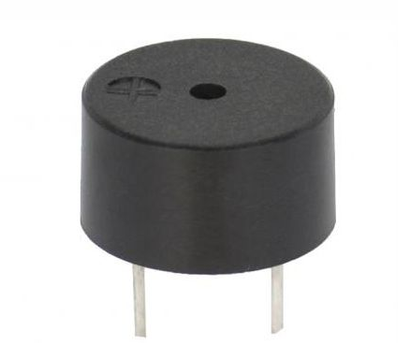
The buzzer is an onboard audio output device available on the ARIES IoT v2.0 Board that can generate audible tones, alerts, and notifications under software control. It operates by converting electrical signals into sound waves, enabling the board to provide real-time audio feedback for various events and system conditions. The buzzer can be driven using GPIO or PWM signals to produce different sound patterns and frequencies, making it suitable for status indication, warning alarms, user notifications, and interactive applications. In the ARIES IoT board, the buzzer is integrated directly onto the board, eliminating the need for external audio hardware and simplifying the development of embedded, automation, robotics, and IoT applications that require audible feedback.
Prerequisites
- Windows 10 or above/Ubuntu 20.04 LTS or above
- Arduino IDE
- VEGA ARIES Board support package
Components Required
- ARIES IoT v2.0 Board
- USB type C cable
Circuit Diagram
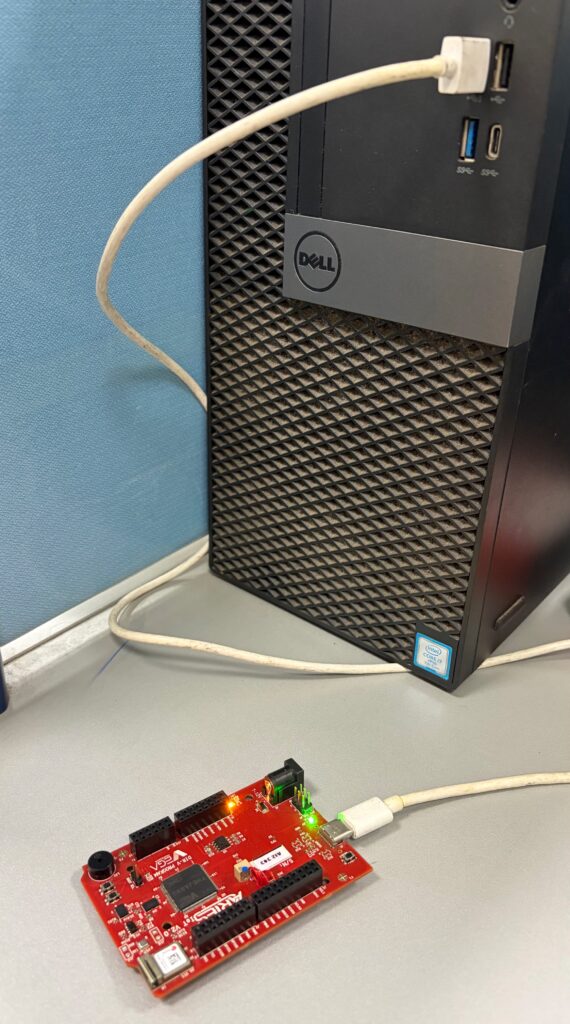
No external connections required to test this code. You can directly connect Aries IoT board through USB and upload the program.
Procedure
Setup VEGA Ecosystem
Download and install Arduino IDE 2.3.10
Once installed Open Arduino IDE
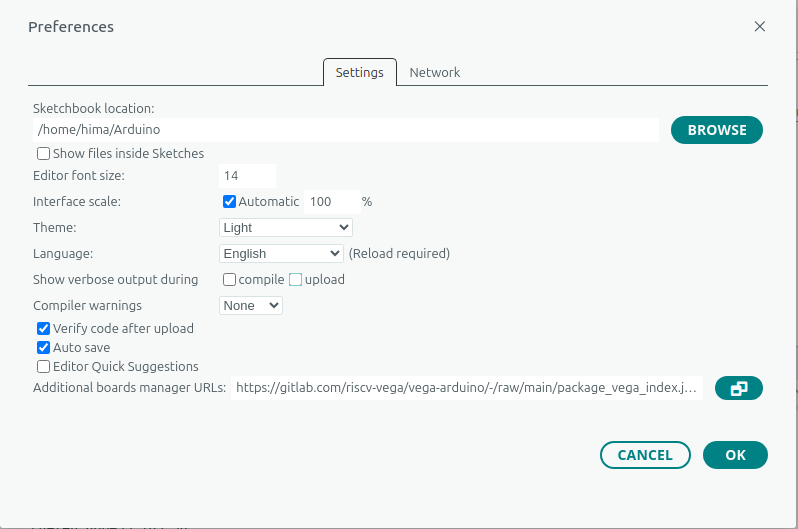
Open File->Preferences, Add below JSON in “Additional Boards Manager URL”, Press OK
https://gitlab.com/riscv-vega/vega-arduino/-/raw/main/package_vega_index.json
Open Tools->Boards->Board manager, Search for “vega”
Install “VEGA ARIES Boards” with latest version
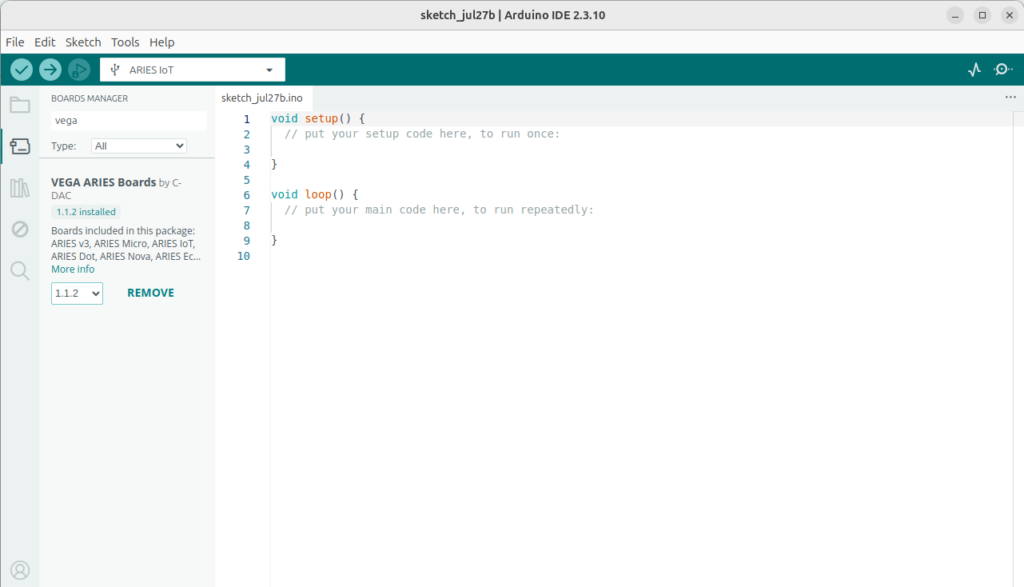
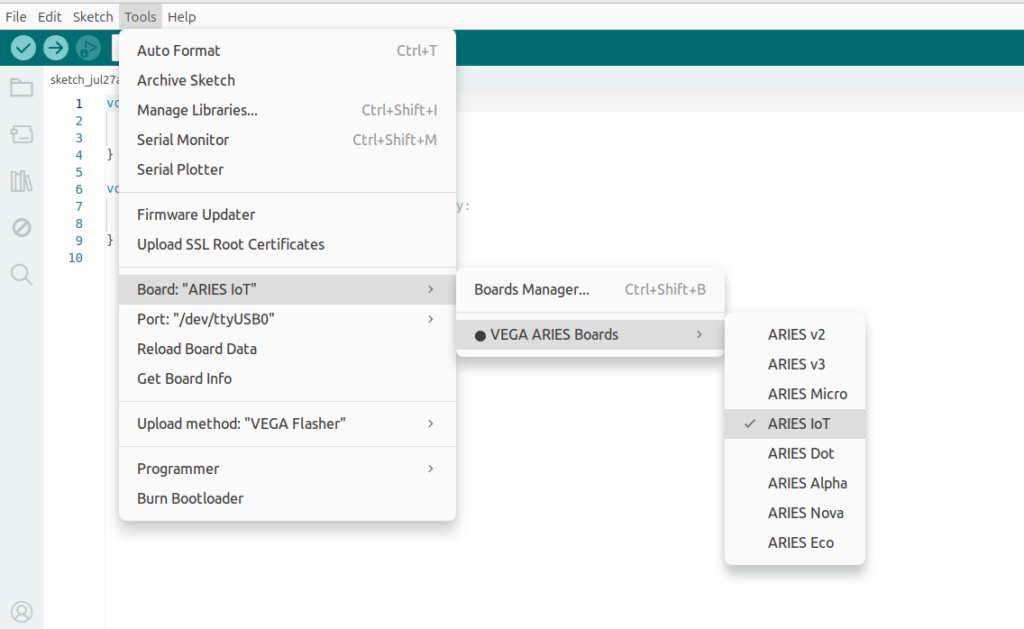
Select ARIES IoT Board from Tools -> Board -> VEGA Processor: ARIES Boards -> ARIES IoT
Check your ARIES board whether the BOOT SEL pin is shorted using a jumper or not.
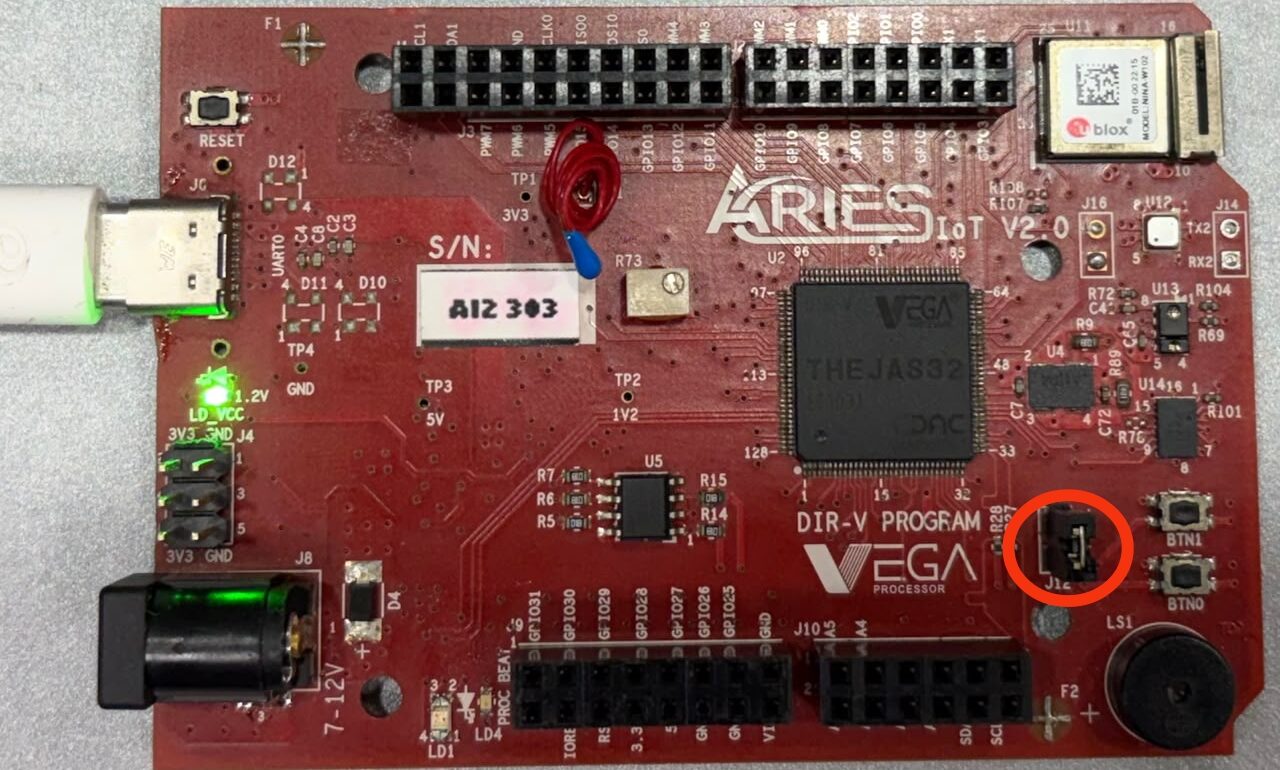
If
BOOT-SEL jumper (J12) is shorted :
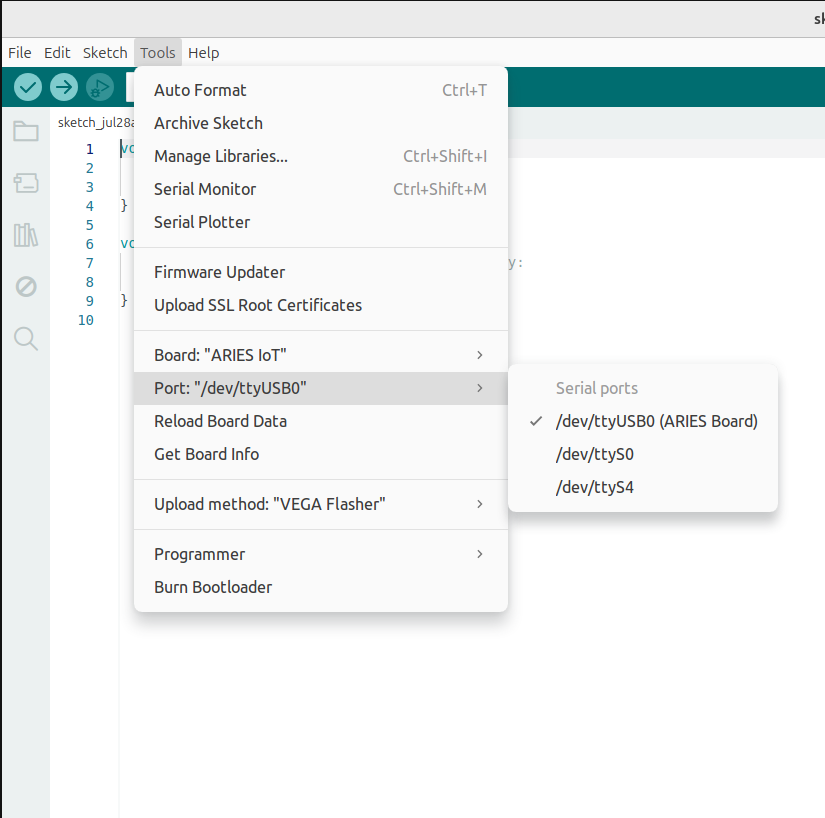
Select Tools -> Upload method -> VEGA FLASHER
Else
Select Tools -> Upload method -> VEGA XMODEM
Here the BOOT SEL pin is shorted, so we have selected VEGA FLASHER from Upload method
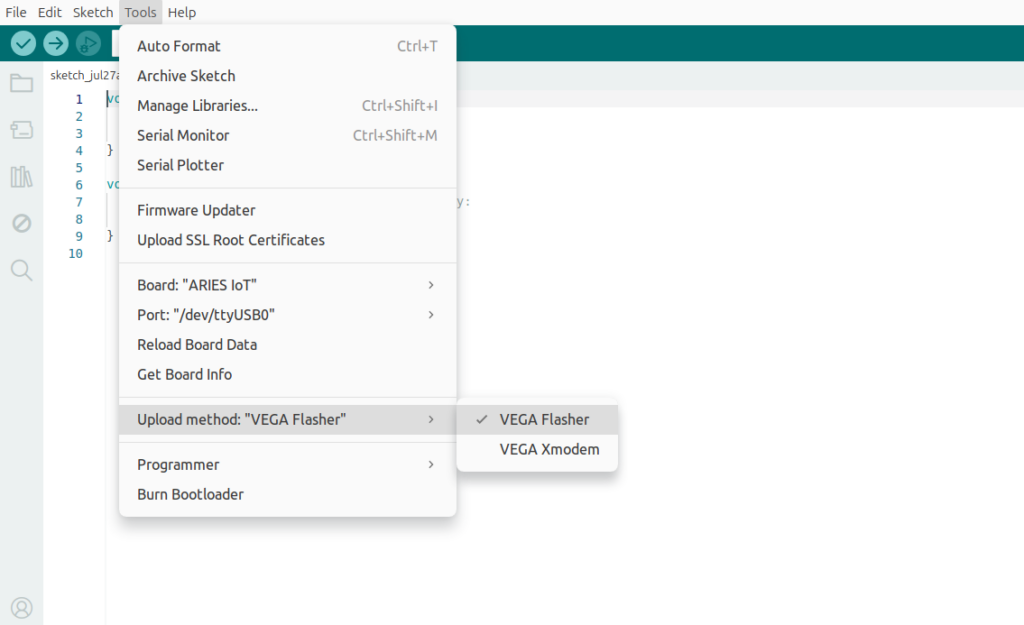
Also select appropriate port from Tools -> Port -> COM* (ARIES Board) for windows and dev/tty/USB*(Aries Board) for ubuntu
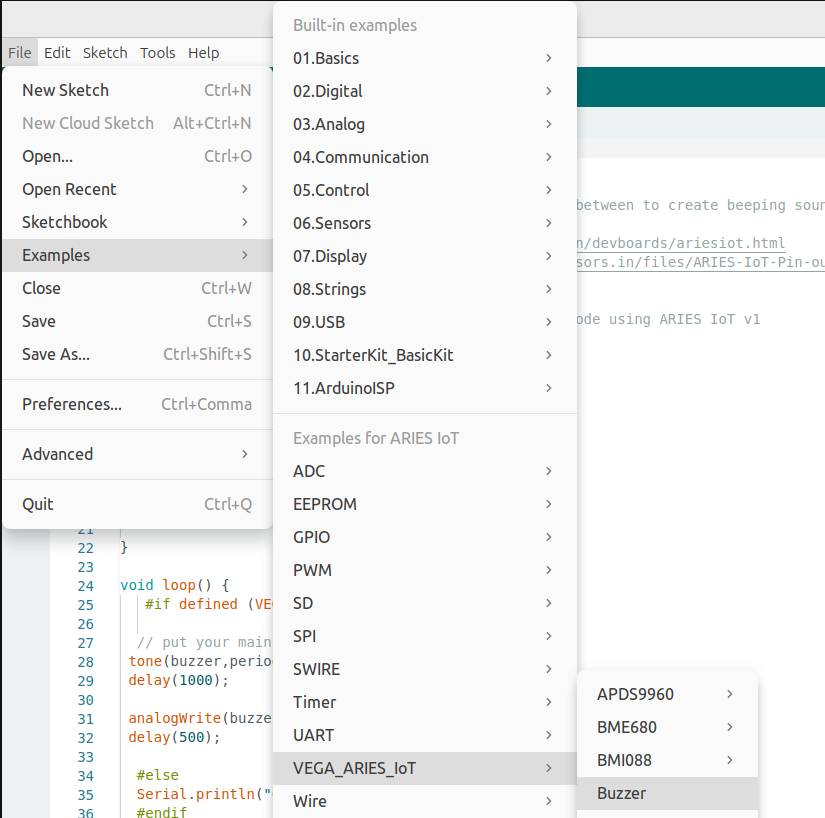
Now, Open Files -> Examples -Under Examples for ARIES IoT -> VEGA_ARIES_IoT -> Buzzer
Finally Upload the code to ARIES IoT board
Output
After successfully uploading the code to the ARIES IoT board and opening the Serial Monitor at 115200 baud, the buzzer generates an audible beep sound.